Category: Entrepreneurship
I was talking to a friend yesterday and he said, “Just another Monday.” But yesterday was Tuesday. I asked him what he meant. He said, “Every day feels like a Monday – I just get up and do it again.”
It has been 427 days since I mark the start, for me, of the Covid crisis (March 11th – the first day I stayed home.) As the world, at least in some places, loosens up a lot, people are anxious to get back together in physical form. I see it everywhere around me – dinners, meetings, people in Zoom in offices, background noises, air travel, and endless requests to get together in person.
Fred wrote an interesting post titled In-Person vs On-Screen that starts out:
Last week I spent three hours with my six partners in a conference room talking through what we are investing in and why. It was a terrific session and I had more “ahas” in those three hours than I have had in many many months. There really is no substitute for sitting together with your colleagues working things out face to face.
The post describes his thinking around remote, hybrid, and in-person. He talks about his, and his partners, current dynamics. He ends with a strong assertion.
Each company needs to figure this out in a way that works for their team and culture and I believe that there is no “right way” for everyone. But I also believe that in-person interactions remain critical to making better decisions, better products, better cultures, and better companies and so I would encourage everyone, including the fully remote teams, to figure out how to make in-person interactions happen on some regular cadence.
I see this in my own partnership. Several of my partners are regularly getting together in person. While I’m supportive of that, I have no interest in it and would rather continue to be fully remote for now. Fortunately, they understand. We are working on understanding and implementing our own hybrid dynamics that work for each of us and the team as a whole.
While we are privileged to be in a business and an industry where this is something we can explore, I immediately think of Susan Cain’s essential book Quiet: The Power of Introverts in a World That Can’t Stop Talking. When I read it in 2012, a few puzzle pieces slid into place for me.
I strongly agree with Fred’s statement:
Each company needs to figure this out in a way that works for their team and culture and I believe that there is no “right way” for everyone.
Since the beginning of the year, I’ve been in numerous “back to the office” conversations. I’ve participated in public discussions about remote vs. hybrid vs. in-office. I’ve talked with almost every CEO and board that I work with about this topic.
I’ve been asserting, like Fred, that this is a custom answer for each company. However, I’m adding a twist. I encourage the CEOs not to let their personal bias drive the answer. For some CEOs, that’s intolerable. For others, it has been enlightening.
I know several CEOs who are desperate to get back to the office. They hate working at home. They struggle not traveling around and being with their team. They are miserable with remote work. So, regardless of what anyone on their team says or wants, they will not have a remote work option. And, in one case that I’m aware of, there is not going to be any semblance of a hybrid option.
I know several CEOs who have let their leases end or sublet their offices. They love working at home. They have no interest in going to the airport. They deeply embrace remote work. No matter what, they are going to be a remote-first company in the future. And, in more than one case, there is no plan ever to rent any office space again.
When you suspend your individual bias, I expect you’ll find interesting and unexpected answers from different people in your company. When you ask them for approaches, you might find some that you hadn’t thought of. Knowing that there is a wide spectrum of desires among your current team, especially after 427 days of Mondays, is an important starting point for figuring out the best configuration for your company going forward.
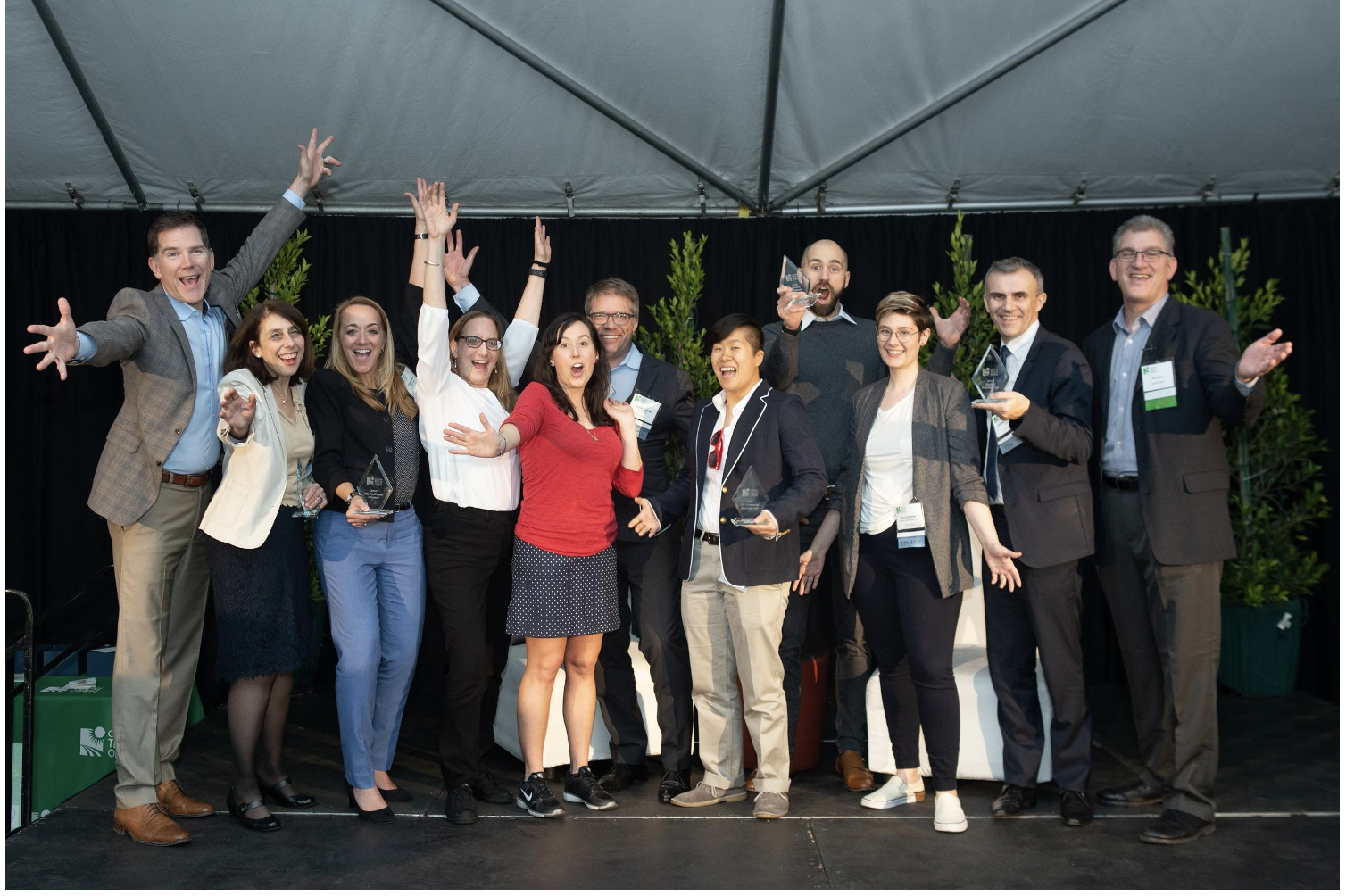
Over the past year, we’ve seen an increase of people from across the business and political spectrum join the fight against climate change and pledge to support a greener, more sustainable future. Investors are seeking both financial returns and environmental impact and looking for opportunities to partner with ventures that are working to tackle our world’s biggest energy and environmental challenges.
Enter Cleantech Open, the world’s largest and oldest cleantech accelerator for cleantech, climate tech, and sustainability startups. Through Cleantech Open, startups can build their entrepreneurship skills and professional networks, access expert mentorship, and connect with potential investors, partners, and customers. Cleantech Open is currently accepting applications for its 2021 cohort, and you can learn more and apply here by April 18.
Beth Zonis, the Director of Cleantech Open Northeast, and my wife Amy Batchelor met through a mutual connection. They are both Wellesley College alumnae (Amy is a Trustee of Wellesley College, and Beth is Vice President of her graduating class.) They hit it off right away and found a lot of common ground, especially in their shared passions for Wellesley, the environment, and innovation. This led to our foundation (the Anchor Point Foundation) partnering with Cleantech Open Northeast, the northeast region of Cleantech Open, managed by NECEC as the on-the-ground affiliate.
Cleantech Open is like a mini MBA for startups. Its mission is well aligned with ours, as Cleantech Open is focused on combating climate change, growing the green economy, and improving Environmental Justice through innovation and entrepreneurship. We are staunch advocates for the environment, and we believe that innovation is critical to addressing many of the world’s challenges.
Cleantech Open has a particular focus on incorporating diversity, equity, and inclusion (DEI) values into its program. It is working to increase the diversity of startups, mentors, and partners engaged with the program. In 2020, 63% of the startups in the Cleantech Open Northeast cohort were founded by women or BIPOC leaders. This year, the accelerator plans to offer programming to educate startups on incorporating DEI values into their ventures.
Cleantech Open Northeast is also creating new curriculum content for this year’s cohort to enable startups to measure their greenhouse gas emissions and carbon footprint to help them build a measurement mindset from the beginning. This is an effort in collaboration with NYSERDA, the New York State Energy Research and Development Authority.
Over the years, many Cleantech Open alumni have progressed to be accepted into other accelerator programs, including Techstars. A few examples of recent Techstars alumni who have participated in both programs are Virimodo, Sunthetics, and SparkCharge.
Virimodo is reducing greenhouse gas emissions in cities by making it simple for buildings to become carbon neutral. Virimodo was a 2018 Cleantech Open Northeast Winner and a Cleantech Open National Finalist and participated in the 2020 Techstars EnergyTech accelerator in Birmingham, Alabama.
Sunthetics is developing software in tandem with electrochemical equipment for more sustainable and efficient chemical manufacturing. Sunthetics was a top 10 team in the 2020 Cleantech Open Northeast accelerator and a participant in the Techstars Heritage Group Accelerator for hard tech.
SparkCharge is making the world’s first mobile and intelligent on-demand EV charging network with a portable, ultrafast charging unit for electric vehicles. SparkCharge participated in the 2016 Cleantech Open Northeast accelerator and Techstars Boston in 2018 and recently had a chance to pitch on Shark Tank, where the company signed a $1 million agreement with Mark Cuban and Lori Greiner.
Cleantech Open is a nonprofit accelerator that takes no equity in its participating startups. This year, Cleantech Open Northeast will award $50,000 in cash prizes, including $10,000 for a carbon sequestration startup that completes the accelerator, and more than $300,000 in goods and services, including incubator and co-working spaces, consulting services ranging from marketing and communications to accounting to assistance on special projects, software packages for startups, and even financial assistance for startups participating in certain states.
To learn more, register for a Cleantech Open kickoff event between now and the April 18 application deadline. These are great opportunities to meet the Cleantech Open team, entrepreneurs, and mentors. Startups will have a chance to pitch!
Cleantech Open Kickoff Webinar 11, April 13 @ 7:00 PM Eastern, Register here
Cleantech Open Kickoff Webinar 12, April 16 @ 12:00 PM Eastern, Register here
Endless Meaningless Words in Entrepreneurship and Venture Capital
I read On Truth and Untruth: Selected Writings by Nietzsche yesterday. It was chewy, but soaked me in an interesting set of ideas about what words mean, along with a bunch of stuff around the concept of truth.
I get a lot of inbound random email where I get asked a lot of questions, so I see lots of questions repeat or get asked in different ways. For example, I continually get asked some version of “How do I get a job as a VC” and point everyone at my partner Seth’s post How To Get a Job In Venture Capital.
This morning, as I was grinding through email, I saw a few questions that could be generally categorized as “Are we in a bubble?” There were different flavors, but if I summarized, it would be:
- Is the public market in a bubble?
- Is VC in a bubble?
- Are SPACs a bubble?
Whenever I see the word bubble, the phrase “Bubble, bubble, toil, and trouble” comes into my mind, which I know is not how the Macbeth Song of the Witches goes, but that’s just how my brain works.
Oh – you want a brief interlude for the Song of the Witches? Ok – here it is.
Round about the cauldron go:
In the poisoned entrails throw.
Toad, that under cold stone
Days and nights has thirty-one
Sweated venom sleeping got,
Boil thou first i’ the charmed pot.Double, double toil and trouble;
Fire burn and cauldron bubble.Fillet of a fenny snake,
In the cauldron boil and bake;
Eye of newt and toe of frog,
Wool of bat and tongue of dog,
Adder’s fork and blind-worm’s sting,
Lizard’s leg and owlet’s wing.
For a charm of powerful trouble,
Like a hell-broth boil and bubble.Double, double toil and trouble;
Fire burn and cauldron bubble.Scale of dragon, tooth of wolf,
Witch’s mummy, maw and gulf
Of the ravin’d salt-sea shark,
Root of hemlock digg’d i’ the dark,
Liver of blaspheming Jew;
Gall of goat; and slips of yew
Sliver’d in the moon’s eclipse;
Nose of Turk, and Tartar’s lips;
Finger of birth-strangled babe
Ditch-deliver’d by a drab,
Make the gruel thick and slab:
Add thereto a tiger’s chaudron,
For the ingredients of our cauldron.Double, double toil and trouble,
Fire burn and cauldron bubble.Cool it with a baboon’s blood,
Then the charm is firm and good.
If you enjoyed that, now you know why I think of this phrase every time I hear the word bubble.
Double, double toil and trouble, Fire burn and cauldron bubble.
My answer to the bubble question is, “I have no idea, and I don’t care.” I’ve never tried to time the markets. I am not going to ever try to time the markets. Instead, I’m going to keep working on what I’m obsessed about and try to improve each thing regardless of the macro-dynamics.
I went looking for Baboon Blood on Amazon to make my charms firm and good. I didn’t find anything other than a song from Art Zoyd. I did, however, find (and buy) a Baboon Blood flask via a Google search.
For the last several months, I’ve heard or read the phrase “the new normal” 7,354 times. I’ve steadily grown tired of it and now I believe it is an invalid concept.
There is no new normal. We have move forward and get better.
Steve Case wrote a great OpEd recently titled There’s no going back to the pre-pandemic economy. Congress should respond accordingly.
This week, Congress will likely take up the next steps in the economic response to the covid-19 pandemic. If the package is like previous efforts, it will focus on trying to turn back the clock to February 2020: treating the economy as if it were Sleeping Beauty, merely needing to be awakened to be fully restored. This strategy is a mistake: Congress needs to stop solely backing efforts to restore the old economic reality and focus on how to develop a new one.
The Kauffman Foundation recently came out with a mission to Rebuild Better.
Comprised of more than 150 entrepreneurship advocates across the country, the Start Us Up coalition is working to elevate the voices of entrepreneurs so policymakers reverse decades of misplaced priorities that have made it far easier for big businesses to grow than for new businesses to start at all. Our goal is not just to restore the economy, but to rebuild better by ensuring all Americans — especially female, minority, immigrant, and rural entrepreneurs who have historically been marginalized by investors and lenders — can turn their ideas into businesses.
The goal should not be the new normal. The old normal didn’t work for many Americans. The old normal had incredible income inequity, racial inequity, gender inequity, and many other inequities. When I wrote that I’m Fast-Forwarding to 2025, I had this in the back of my mind, but I couldn’t articulate it.
Change is unpredictable, bumpy, impossible to predict, challenging, stressful, and non-linear. But, as humans, all of these things make us incredibly uncomfortable. Often, we want to go back to “the way things were” since that felt safe, or predictable, or even if we didn’t really like it, was at least something we understood.
Going back to the way we were, with some adjustments, is how I interpret the phrase “the new normal.” I don’t think it will work. I don’t think it’s desirable. I don’t think it’s progress.
So many of the leaders I respect like Steve Case and The Kauffman Foundation are being clear about this. They may use different words, but I feel completely aligned with their vision.
I have no interest in a new normal. I’m only interested in something much better across our society that what was the old normal.
I encourage leaders to embrace change. Embrace complexity. Embrace uncertainty. I certainly am.
Venture Deals Online Course – Spring 2020 Registration Is Open
We are running the Venture Deals Online Course again. Registration is now open and it runs from March 8, 2020 – May 1, 2020. It’s produced by Techstars and Kauffman Fellows.
We’ve run the course six times now and have had over 25,000 people take it.
It’s free, although it’s recommended that you have a copy of our book Venture Deals: Be Smarter Than Your Lawyer and Venture Capitalist. The 4th Edition is out with plenty of new and improved stuff.
The course runs for seven weeks with the following syllabus.
- Week 1 – Introduction of key players/Form or join a team
- Week 2 – Fundraising/Finding the Right VC
- Week 3 – Capitalization Tables/Convertible Debt
- Week 4 – Term Sheets: Economics & Control
- Week 5 – Term Sheets Part Two
- Week 6 – Negotiations
- Week 7 – Letter of Intent/Getting Acquired
If you are interested, sign up now and tell your friends who are interested in venture deals.
When I started blogging in 2004, there weren’t many VC bloggers. I followed Fred Wilson and David Hornik’s lead and just started writing what was on my mind about, well, anything that was on my mind.
Today, VC content pieces are everywhere. I’ve become less interested in writing this kind of stuff so my blog has evolved into whatever is on my mind, but a lot less “VC stuff.”
Every now and then I come across a spectacular VC blog post (or article in Techcrunch, or one of the other places VCs now put their content pieces.) As I was procrastinating from what I was working on, I noticed an article titled Mike Volpi on the art of board membership.
It’s a spectacular article. Go read it now. I particularly like the topics he went after.
- Nature of the relationship
- The mirror
- Context
- Network
- What happens in between
- Availability and relevance
- Delivering a message that can be heard
When I wrote Startup Boards: Getting the Most Out of Your Board of Directors with Mahendra Ramsinghani, we tried to include constructive thoughts about how venture-backed boards work and how to improve them, along with plenty of examples. As I’ve been on some great, ok, and terrible boards (and have been an effective, mediocre, and ineffective board member), I find clear articles like Mike’s powerful as I reflect on how I act as a board member.
I ever get around to writing a 2nd Edition, I plan to reach out to Mike and see if I can include some of this. In the meantime, I leave you with his powerful, and well said ending.
Board membership is a privilege and a nuanced responsibility that can have a transformational impact on businesses. Sometimes investors, independents and entrepreneurs forget this. Entrepreneurs should expect a great deal from their boards — not as blind supporters but as true copilots. Likewise, board members should not view board membership as a list of icons on their LinkedIn profile, but as a subtle yet massively impactful role they play in the creation of great businesses. When these relationships function properly, the two parties become true partners in the entrepreneurial journey.
I’ve noticed a degradation in presentation styles when displaying slides on a screen. This is starting to become a pet peeve of mine, so feel free to ignore me or tell me to get over myself if you disagree with this advice.

Assume a conference room with a large screen TV (or two) on the wall at the “front” of the room. The conference table – often a long rectangle – has chairs along the side perpendicular to the TV. The classical “head of the table” is at the far end facing the TV.
Why in the world would the presenter sit anywhere other than in one of the chairs at the end of the table closest to the TV?
Assume the TV is just showing slides. Don’t you want everyone in the room looking at you and the slides?
Assume there is video conferencing. In most cases, the slides will dominate and the video conferencing participants will be in small windows on the screen anyway. And, when they are looking at their computer while you are presenting, they will mostly see the slides anyway.
The only time this doesn’t apply is when there isn’t a presentation. When you are trying to engage the people on the video conference in the room during the meeting, and there is nothing being presented on the screen, the pet peeve that I have doesn’t apply.
In the world of paper presentations with no video screens, it made sense for the presenter to sit in the middle of one of the long sides of the table to engage the whole room. But, when there is a screen with stuff on it, position yourself near the screen so the people in the room can look at you and the screen at the same time.
The phrase “frog in a blender” was in my head all afternoon. Earlier in the day, one of my partners described a situation as the cliche-ish “boil a frog slowly” and I responded with “We’d all be better off if we just put the frog in a blender.”
That generated grimaces.
I couldn’t find any “Will it Blend” for frogs, but I found the next best thing – Pickled Pigs Feet.
It doesn’t have quite the same rhythm, but you get the idea. As I hummed the song I made up to the phrase “Frog in a Blender”, I figured there must be a real song named this. There is, it’s awful, and the lyrics are horrifying, but whatever. My song is much better.
As I was driving home, working on the second verse, I flashed to a conversation with a friend I had a few months ago.
He said, “How do you eat a shit sandwich”? I responded with “Gross – no idea.” He said, “Quickly.” After I chucked, he said, “Ben Horowitz told me that.” So, I’m going to attribute that one to Ben Horowitz, which fits nicely with some of his anecdotes about shit in his book The Hard Thing About Hard Things.
I like to be as deliberate as I can about decisions. I try to make them quickly, but with a reasonable amount of data and critical thinking. Sometimes this works, other times it doesn’t. When I reflect on the things that have caused me the most pain, it’s when I let a shit sandwich sit in my refrigerator for a while, looking at it every day when I get a kombucha. Or, when I wake up one day and realize that I’m the frog that has been boiling slowly.
I wonder if eating a shit sandwich quickly is the same as putting a frog in a blender. Both are pretty awful, but it seems like the best approach is to get it over with quickly.
I’ve been a remote worker for 24 years. While I have an office in Boulder, I’m physically in my office for a small amount of time.
For many years, this was a function of travel. My investments have always been geographically distributed across the US and I spent the majority of my time between Monday and Friday on the road.
I learned how to work in hotel rooms, in other people’s offices, in conference rooms, at coffee shops, and in houses (mine and friends.) In 1995, at the dawn of the age of the commercial Internet, this involved landlines, answering machines, pagers, and fax machines. Today, my bet is that most 25-year-olds have never used one of these things.
In the past few years, there have been several high profile examples of scaled companies that have a completely distributed workforce. Automattic (WordPress) is my favorite, as it’s been organized that way by design from inception. Zapier is another one that has gotten a lot of press lately around its distributed workforce approach. In a moment of delicious self-reference, Zapier put up a blog post titled 25+ Fully Remote Companies That Let You Work From Anywhere.
Many companies in our portfolio have multiple locations and increasingly distributed workforces. There’s a profound difference between “two locations” and “distributed”, but they are part of a similar phenomenon where the constraint of the physical is lowered.
As I reflect on my own work patterns, they are less and less connected to any particular physical space. This doesn’t mean that physical spaces are eliminated from my life, but that my work isn’t actually dependent on any of them. As I type of my laptop, in a room at my house in Longmont, with Amy sitting next to me, it’s easy to see how my day is going to unroll with a shower, followed by a video conference, and then an in-person meeting with someone coming to spend some time with me.
When I look at my schedule next week, I’m in my office on Monday for my partner meeting, but there’s literally no other reason I need to be in my office next week. I have some in-person meetings, but if the weather is nice, they will be walks outside. Any of them could be video conferences instead of face to face meetings.
In the past five years, as I’ve limited my travel, I’ve gained back a lot of time not spent moving from point A to point B. When I’ve chosen to travel as I did recently on a multi-day trip to Seattle, I’ve been able to be deliberate about where I was and who I spent time with, and none of it required me having a physical space.
I continue to strongly believe that place matters for the development of sustainable startup communities. But, this is different than physical office spaces. I’m going to explore this more over the next year as I continue to embrace the lack of constraints around physical space in my world.
If you have good or bad experiences with distributed work, I’d love to hear them. I know there is an increasing number of technologies in use for helping manage organizations that are distributed – I’m interested in real stories of what works, vs. marketing hype. And, given that humans are intensely social creatures, I’d love to hear stories about how you maintain the appropriate level of physical interaction in a distributed workforce.